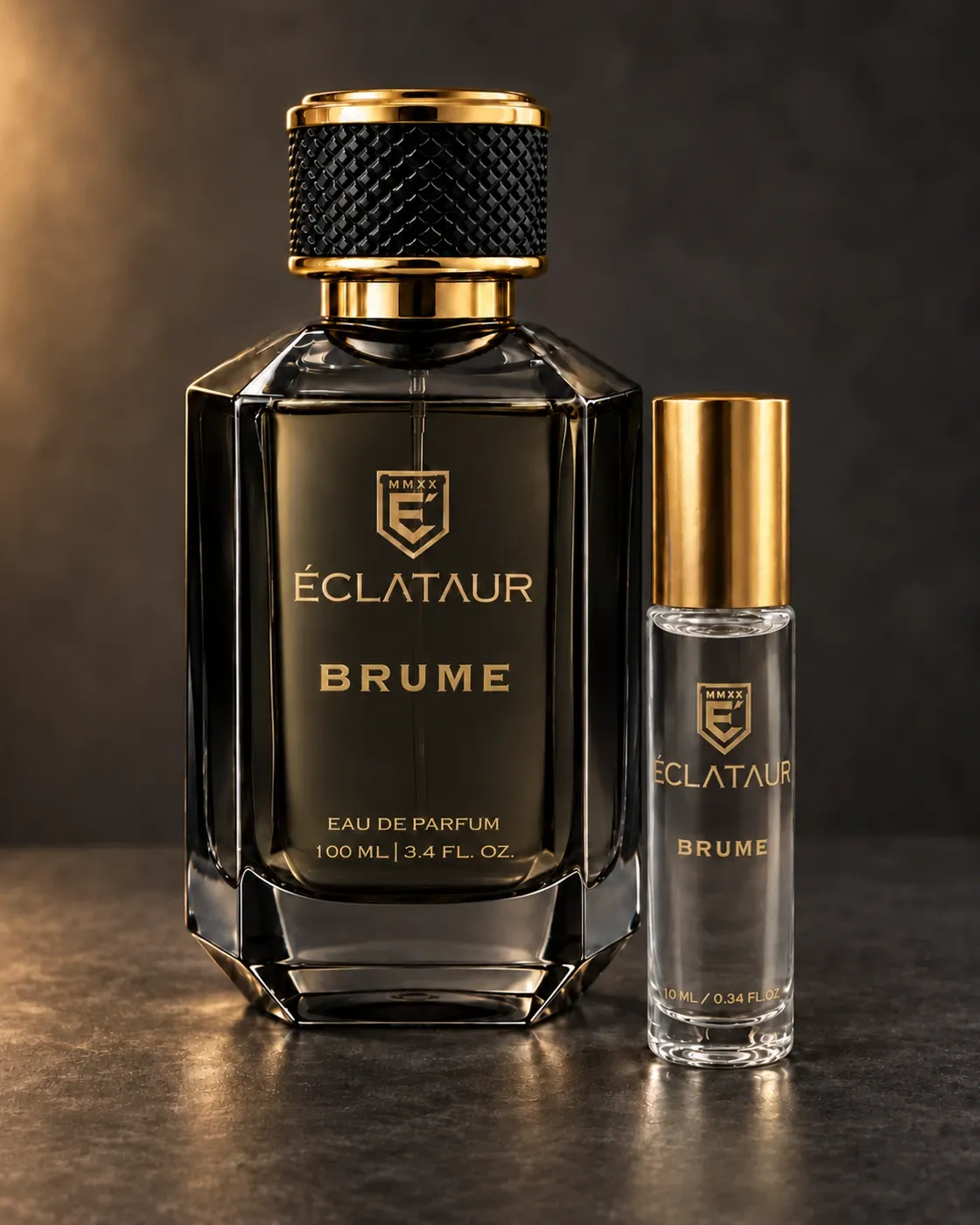
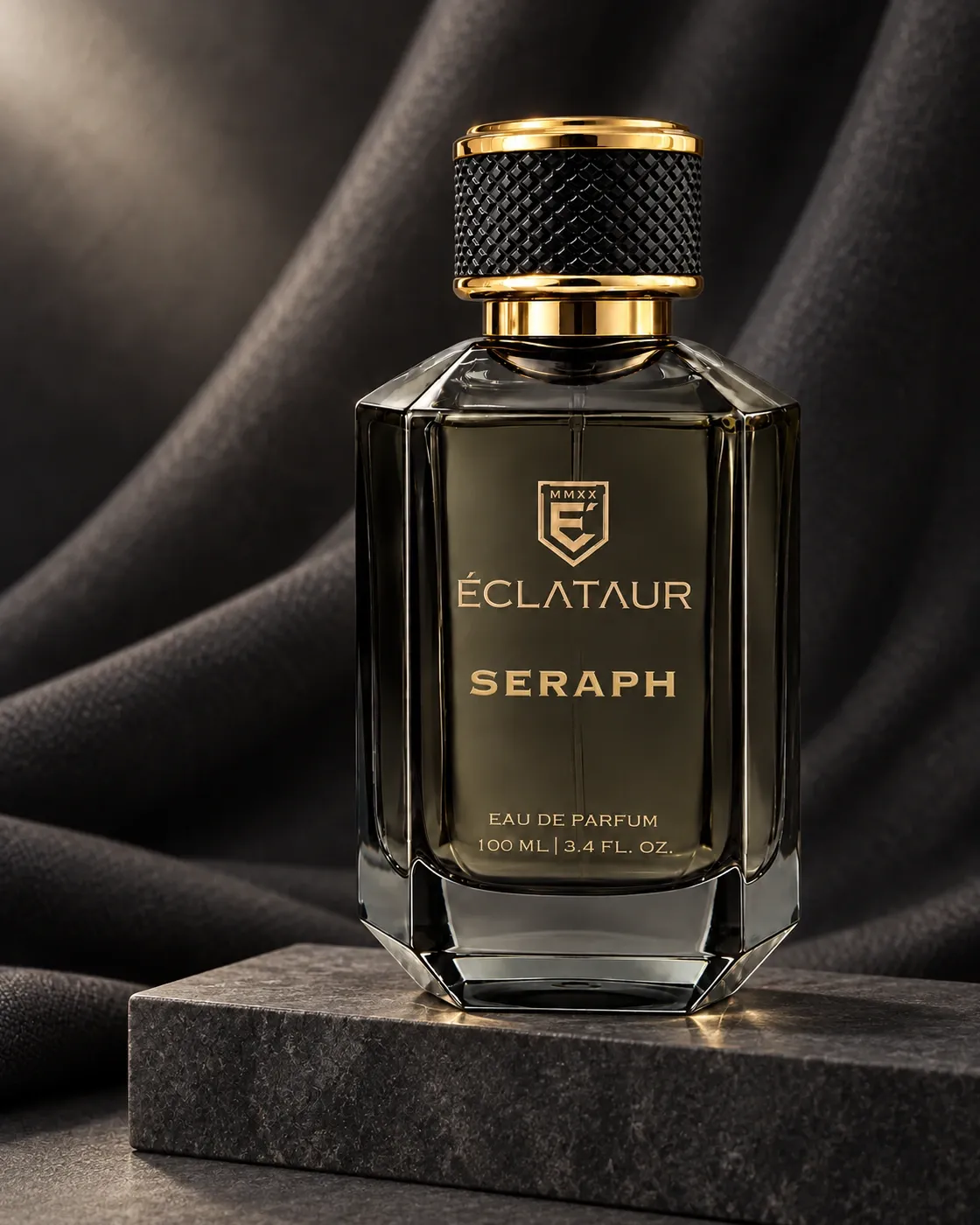
The Atelier Notes · Issue 01
Your bottle of ÉCLATAUR will ship in two to three days. That part is normal. What is not normal, and what most niche houses do not do, is the thirty days that happened before your order. Every batch we make rests for a full thirty days inside our studio in Sunnyvale, Texas before it is ever added to live stock. By the time a bottle is available for you to buy, it is already finished. The wait is not yours. It is ours. And I want to tell you why we do it that way.
Once or twice a month, someone messages me with a version of the same question. They have just ordered a bottle from another niche house, and theirs shipped the same day. Mine shipped in two days. Theirs sounded great in the first hour and faded by the third. Mine did not. What is the difference? The difference is the thirty days before the bottle ever reached the website. Most fragrance brands fill, pack, and ship within hours of compounding. We do the opposite.

What Seven Days Actually Gets You
Let me start with what is honest about a seven-day perfume. It is real. The formula is complete, the bottle is sealed, and a talented perfumer can make it smell impressive on the strip in the studio. The problem is what it does on skin twelve hours later.
A young perfume is loud at the top and thin at the heart. The aromatic molecules have not had time to bond into a unified accord, so they release out of phase. The opening is bright. The dry-down is hollow. The middle that should carry the scent across an evening is not there yet, because it is still forming. Here is what is happening inside the bottle in those first three weeks.
Days One Through Seven
The freshly compounded formula is chemically restless. Top notes flash loud because they have not yet integrated with the heart. The base is hidden underneath, still bonding with the alcohol carrier. On the strip, the perfume reads bright and confident. On skin, it collapses inside an hour. Most niche houses ship at this stage. The customer wears the loud version and never meets the finished one.
Days Eight Through Twenty-One
The molecules begin to find their places. Volatile top notes settle into the heart. Heart notes start their slow conversation with the base. The accord stops being a collection of separate voices and begins to become one. Around day eighteen, the change is small but audible on the strip. By day twenty-one, the heart and base are speaking to each other.
Days Twenty-Two Through Thirty
The composition resolves. The base finishes its reaction with the alcohol. The fragrance becomes what it is going to be. On day thirty-one, every batch is QC-tested. Only batches that pass are released to live stock. Wait longer than thirty days and you get diminishing returns and the alcohol begins to tire. Thirty is the window.
The seven-day fragrance is technically perfume. The thirty-day fragrance is finished perfume. The difference is not the molecules. It is whether they have stopped fighting each other.
The Operational Truth Behind a Two-Day Ship
So how does a brand that waits thirty days still ship in two? The answer is sequencing. We do not start the thirty-day clock when you order. We start it the day a batch is compounded, and that happens long before the product page goes live. By the time you click buy, the wait is already done. What is left is filling, packing, and a label.
The full chemistry behind the thirty-day rest is in our Maceration Perfume guide. This post is about the part that does not show up in the chemistry. The part where I had to choose between speed and the standard, and built the company around the slower answer.
The Math I Am Not Supposed to Tell You
Here is what nobody talks about. Holding every batch for thirty days has a real business cost, and I will tell you what it is. By every conventional metric, a thirty-day cycle is a worse business than a seven-day one. Less efficient capital. Slower response. Higher complexity. Every operations consultant I have ever spoken to has flagged this. They are not wrong. I do it the slow way anyway.

Working Capital
A seven-day production cycle means one batch is in motion at any given time. A thirty-day cycle means roughly four batches are in motion at once, one resting in week one, one in week two, one in week three, and one ready to bottle. That is four times the working capital tied up in raw materials, glass, and finished compound that is not yet earning revenue.
Response Time
I cannot react quickly to demand. If EMBER sells out on a Friday, I cannot replenish stock by Monday. The next batch was already laid down a month ago. Forecasting becomes harder, not easier. Stock-outs happen. Customers wait. The trade-off is built in.
Operational Complexity
Four parallel batches require four times the tracking, four times the labeling, four times the storage, and four times the QC discipline at the end of each cycle. A seven-day cycle is simple. A thirty-day cycle requires a system. We built the system because the system is what makes the standard repeatable.
The Trade-Off
Less efficient capital. Slower response. Higher complexity. The honest case for shipping in seven days is a strong one. I do it the slow way anyway, because the alternative is releasing a fragrance that is not finished, and that is the one thing I am not willing to do. The math is the math. The standard is the standard.
The First Time I Released One Too Early
In the early days of building ÉCLATAUR, before the protocol was locked, I made a batch I was particularly proud of. The opening was beautiful. Dry-down on a strip looked clean. I added it to live stock and sent a few bottles out to friends and early collectors, with the kind of nervous excitement you have when you think you have finally made the thing you were trying to make.
One of those bottles came back with a polite note. It said, in essence, that the opening was lovely but that by mid-afternoon the scent had collapsed into something thinner. The person who wrote it knew what they were talking about. They had worn it. They had paid attention. They were trying to help.
I went back to the studio and pulled a sealed bottle from the same batch that I had set aside for reference. I tested it again two weeks later. It was finished now. The heart was there. The base held. The fragrance I had wanted to make was the fragrance in my hand, just two weeks past the date I had released the first batch to stock. That was the moment the thirty-day rule stopped being a guideline and became a protocol. I refunded the customer. I logged the batch. And I made a decision I have not walked back.
Why It Holds Even When We Scale
The other question I get is whether the thirty-day standard will hold when ÉCLATAUR is bigger. It is a fair question, because every brand says they will never cut corners and most quietly do once the orders pile up. My answer is direct. The thirty-day window is not a cost that scales away. A bigger ÉCLATAUR does not mean shorter maceration. It means more vats, more space, more capital tied up in resting batches.
We will solve the scale problem by building a larger studio with more parallel capacity, not by shortening the wait. The wait is the product. The day we ship a fragrance before it is finished is the day ÉCLATAUR stops being ÉCLATAUR. I am writing that down here, in public, on purpose. If you are reading this in 2028 and a bottle on your desk feels rushed, you have my permission to send me the link to this post.
What I Tell People Who Want to Start a Brand
Once or twice a month I get an email from someone who is thinking about starting their own fragrance house. They want to know what I would do differently, or what I wish I had known. I usually tell them the same thing. Pick the one standard you will not move on, and write it down before you launch. Make it specific. Not quality, because quality is what brands say when they have not decided what they actually believe. Pick a real, costly, falsifiable standard.
Mine is the thirty-day rest. Yours might be the source of your raw materials, or the size of your batches, or whether you ever use synthetic substitutes for a particular note. Whatever it is, name it, write it down, and then build the business around the constraint instead of moving the constraint around the business. The hard part is that you will be tempted to move it. Do not. The standard is the brand. Move it once and it is gone, and the customers who came to you for it will know.
The 30-Day Maceration Perfume Standard – Your Questions Answered
Two to three days. Filling and packing only. The thirty-day maceration window happens before a bottle is added to live stock, not after you order. By the time you click buy, the wait is already done. You ship in two to three days because we already did the patient part for you.
Maceration is the resting period between when a fragrance is compounded and when it is ready to wear. During the first three weeks, the aromatic molecules bond, oxidize, and find their places. By day thirty, the composition has resolved. The full chemistry is in our Maceration Perfume guide. Thirty days is the window where finished perfume happens.
Yes, on skin. A young perfume is loud at the top and thin at the heart. The opening is bright and the dry-down collapses within an hour or two. A finished perfume holds the heart and base across the full wear cycle. If a fragrance fades fast despite a confident opening, it was likely shipped before it was ready.
Working capital and response time. Holding every batch for thirty days means roughly four batches are in motion at once, four times the inventory tied up before it earns revenue. It also means a brand cannot replenish quickly when stock sells out. Most brands choose efficiency. We chose the opposite.
Yes. On day thirty-one, every batch is QC-tested. We check the dry-down on skin, the longevity, the base hold, and the integrity of the heart notes. Only batches that pass are released to live stock. Batches that fail are logged and discarded. This is the gate between maceration and the customer.
Yes. The thirty-day window is not a cost that scales away. We will solve the scale problem with more parallel capacity, not by shortening the wait. The day we ship a fragrance before it is finished is the day ÉCLATAUR stops being ÉCLATAUR. That commitment is on the record.
Try the Wait
Every ÉCLATAUR fragrance rests for thirty days before it is offered. When you order, your bottle ships in two to three days because the wait is already behind it. Start with the Maceration Perfume guide if you want the science, or begin with a tester if you want to wear the work first.