The Craft Series Issue 06
Natural and Synthetic Fragrance Ingredients: The Honest Reasons a Perfumer Uses Both
Natural vs synthetic fragrance ingredients is the wrong fight. A natural oil brings complexity; a molecule brings precision and lift. Perfume needs both.
Natural versus synthetic fragrance ingredients is the wrong fight. A natural material, taken from a plant, brings complexity at a cost; a modern molecule brings precision and lift and has limits of its own. The house uses and names both, and the two myths that drive the argument, that natural means safe and synthetic means cheap, are both wrong.
Natural vs synthetic fragrance ingredients is the wrong fight. A natural oil brings complexity; a molecule brings precision and lift. Perfume needs both, and has for a century, and every fragrance the house makes is built from pressed and distilled oils set against modern aroma molecules, each doing what the other cannot. The question worth asking is not which is better but what each is for.
This article answers that question plainly. It says what a natural material gives a composition and what it costs, what a modern molecule gives and what it cannot, which of each the house uses and names, and why the two myths that drive the argument, that natural means safe and synthetic means cheap, are both wrong. It names only materials the house already publishes; the proportions stay at the bench.
What a Natural Oil Gives, and What It Costs
A natural material is pressed, distilled or extracted from a plant: bergamot oil from the peel, lavender from the flowering tops, jasmine absolute from the petals, labdanum from the rockrose shrub. The house imports its naturals from established suppliers in France, Italy, India and the Middle East, and they are, as its safety page says, the soul of every fragrance.
Complexity
A single pressed oil contains hundreds of molecules in proportions no laboratory would think to combine. That is why bergamot oil smells like bergamot and not like a list of its parts, and why a natural note has corners and shadows a built one lacks. Complexity is what naturals are for.
Variation
The same oil differs by harvest, season and soil, which is a virtue in a glass of wine and a problem in a perfume that must smell the same next year. A perfumer who uses naturals must taste every lot and adjust, which is part of why the house evaluates every batch against the last before release.
Brevity and Limits
Most naturals are light and leave the skin early; a perfume built only from them opens beautifully and is largely gone by the afternoon. And some naturals are restricted by the trade’s safety standards because of what they carry, oakmoss above all, so that the amount a perfumer may use is capped whatever the tradition says.
A natural oil is a landscape. A molecule is a single colour. You cannot paint with landscapes alone, and nobody wants a painting of one colour.
What a Modern Molecule Gives, and What It Cannot
A modern aroma molecule is a single, pure material, made in a laboratory, with one clear smell. Some copy a smell found in nature that cannot be extracted at any price, lily of the valley among them. Some stand in for an animal material that perfumery has rightly stopped taking from animals: the musks, and the ambergris accord. And some are smells that exist nowhere in nature at all, which is where modern perfumery found most of its new ground.
Precision and Consistency
A molecule smells the same in every lot, so the part of a composition built on it does not drift from year to year. That is what lets a house promise that a bottle bought next winter will smell like the one bought this one, and it is why the base of a fragrance, the part that must hold, leans on molecules more than the opening does.
Lift and Persistence
Materials such as ambroxan and the modern woody ambers radiate from the skin and stay for hours in a way almost no natural can. Hedione, a molecule found in trace amounts in jasmine, gives a floral heart air and transparency. They are what make a modern fragrance feel luminous rather than heavy.
Flatness, Alone
A fragrance built only from molecules is clean, consistent and long-lasting, and often oddly thin, because each material is one colour and the composition has no shadows. The molecule needs the natural beside it as much as the natural needs the molecule beneath it.
What the House Uses, and Names
The house publishes what it uses on its pages, which is the only honest way to have this conversation. The note lists carry the naturals by name: Italian bergamot, Calabrian bergamot, Bulgarian rose, jasmine sambac, Mysore sandalwood, labdanum, benzoin, saffron, cardamom, lavender, vetiver, oakmoss. The same lists carry the molecules by name where they are the note: ambroxan in the bases of EMBER, FLARE, LEGENDE, LUCIDE and VESPER; hedione in EMBER’s heart; cashmeran in FLARE’s base; amberwood in EMBER, KNIGHT and AZUR. And the safety page names the molecules at the heart of the house’s base accord, VELUM: Iso E Super, Hedione, Ambroxan and Ambrettolide, set under the naturals so that each composition keeps its character into the evening.
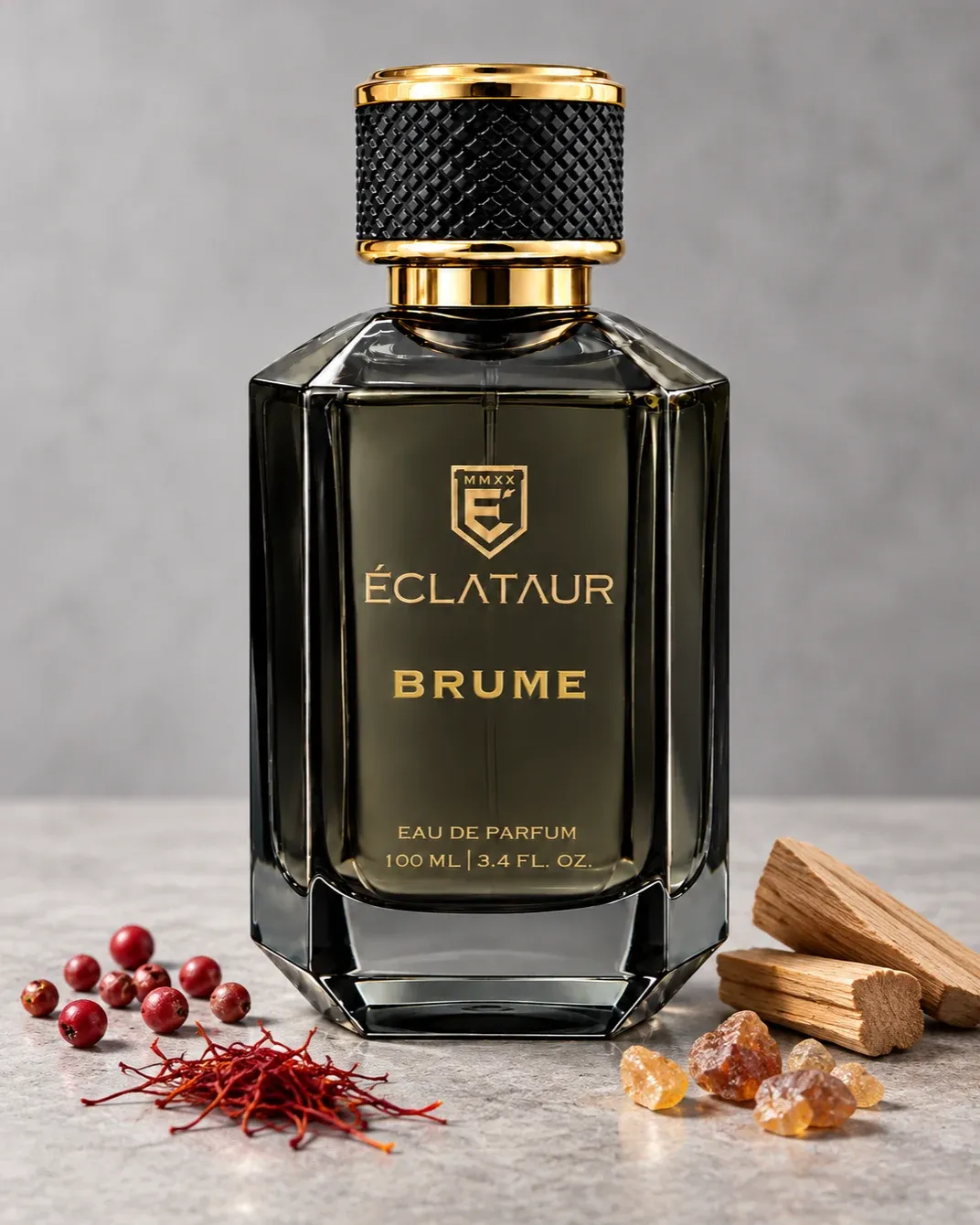
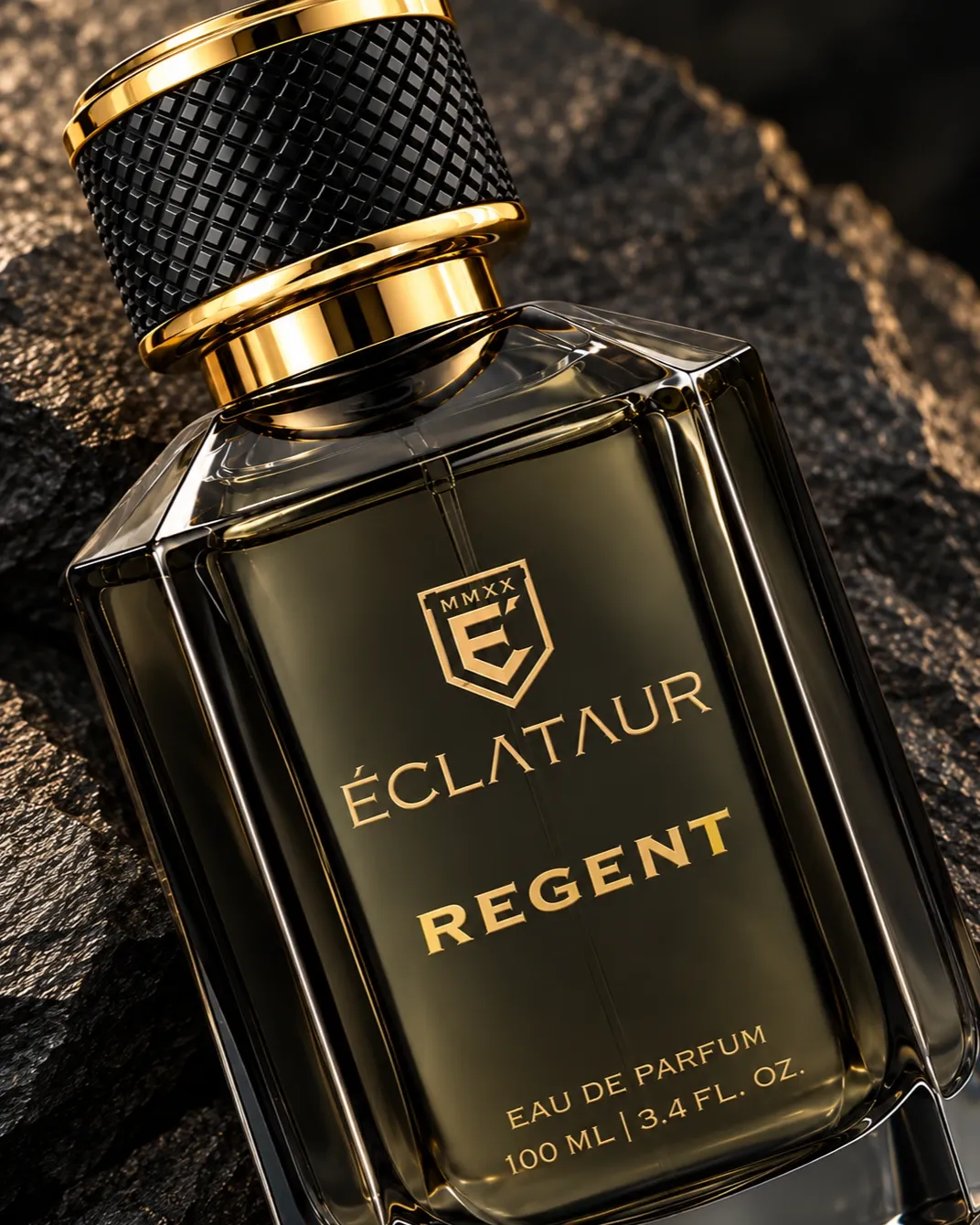
Where a page says accord, the perfumer built the smell from both kinds. The amber accord in CLARTE, BRUME and MYSTERIA is resins and sweet materials; the ambergris accord in FLARE, REGENT and AQUA is a built smell standing in for a material taken from an animal. The oud in BRUME is the natural oil itself. The amber guide walks through the materials, and the notes article explains how to read an accord on a page.
The Two Myths
Natural means safe. It does not. Nearly every material on the allergen lists that the law requires perfumers to declare is natural: linalool from lavender, limonene from citrus peel, eugenol from clove, geraniol from rose. The materials most often restricted by the trade’s safety standards are naturals too, oakmoss and certain citrus oils among them. A molecule is tested as a single known substance; a natural oil is hundreds of substances whose proportions change with the harvest. Both are assessed, and every ÉCLATAUR fragrance is formulated in accordance with the International Fragrance Association’s standards, which set limits on naturals and molecules alike. The label article explains what those declared names mean.
Synthetic means cheap. Some molecules are inexpensive and some are among the costliest materials a perfumer buys, and the same is true of naturals. Price follows rarity and difficulty of making, not origin. What is true is that a composition built to be consistent and long-lasting must lean on molecules in its base, and that this is a decision about quality, not about saving money. The house pays for undenatured organic grain alcohol as its carrier for the same reason it pays for pressed bergamot: because the cheaper alternative has a smell of its own.
How a Perfumer Actually Decides
At the bench the question is never natural or synthetic. It is: what does this composition need here, and which material gives it. A bright opening wants a natural citrus oil, with a trace of a molecule to keep it from reading sweet. A floral heart wants the absolute for its depth and hedione for its air. A base that must hold into the evening wants resins and woods for warmth and the modern ambers and musks for persistence. And where the material a composition calls for cannot be had honestly, animal musk or ambergris from the sea, the perfumer builds the smell from several materials and calls it an accord, which is what the words ambergris accord on the house’s pages mean. The substitution is not a shortcut; it is the only way those smells belong in a modern bottle at all. The article on how a perfume is made follows that decision through a whole formula, and the VELUM article explains the base it rests on.
For a broader account of perfumery’s materials, Britannica’s entry on perfume is a sound starting point, and Fragrantica remains the most useful public record of how individual materials are read by the people wearing them.
Natural vs Synthetic Fragrance Ingredients: Your Questions Answered
Are ÉCLATAUR perfumes natural?
They are built from both: imported natural oils for complexity and character, and modern aroma molecules for lift, consistency and the base that holds into the evening. The house names both kinds on its pages and on its safety page, and formulates every fragrance in accordance with the International Fragrance Association’s standards. No fine perfume is wholly natural, and none should claim to be.
Are natural fragrance ingredients safer than synthetic ones?
No. Most declared fragrance allergens are natural materials, and the most restricted materials in perfumery are naturals too. Safety depends on the specific material and the amount, not on where it came from. Both kinds are assessed against the same standards.
Why do perfumers use synthetic ingredients at all?
For smells that cannot be extracted from nature, for materials that used to be taken from animals, for consistency from one batch to the next, and for the lift and persistence that let a fragrance stay radiant into the evening. A composition built only from naturals opens beautifully and is largely gone by the afternoon.
What is ambroxan, and is it natural?
A modern molecule with a dry amber glow and remarkable persistence, first made as a stand-in for natural ambergris. It is made in a laboratory, usually from a material found in clary sage. It sits in the base of several of the house’s fragrances and is named on their pages.
Is there real musk or oud in these fragrances?
No animal material. The musks are modern molecules, and where a page says ambergris accord the perfumer built that smell from several materials. This is standard across fine perfumery, and it is why that word appears as an accord rather than as an ingredient.
Do synthetic ingredients make a perfume cheaper?
Not as a rule. Some molecules cost more than most naturals and some naturals cost more than any molecule; price follows rarity and difficulty, not origin. A base built on molecules is a decision about consistency and wear, not about saving money.