The Guide Issue 05
Fragrance Families, Explained: Find Your Direction
Nobody finds a signature scent by working through a collection one bottle at a time. They find it by identifying a direction first.
Nobody finds a signature scent by working through a collection one bottle at a time. They find it by identifying a direction first, then testing three or four candidates inside it. Fragrance families are the map that makes that possible. They are not marketing categories: they describe what a composition is actually built from, which is why knowing your family narrows twenty fragrances to four in about a minute.
The vocabulary can feel like a barrier at first, because the industry has accumulated several competing systems over a century and none of them agree completely. Ignore the taxonomy arguments. In practice five families do almost all of the useful work, and every fragrance in our collection sits in one of them or straddles two.
The Five Families That Matter
Here is the whole map, with our own collection placed inside it. Read the descriptions rather than the names, because the names are historical accidents and the descriptions are what you will actually recognise on your skin.
Fresh and Citrus
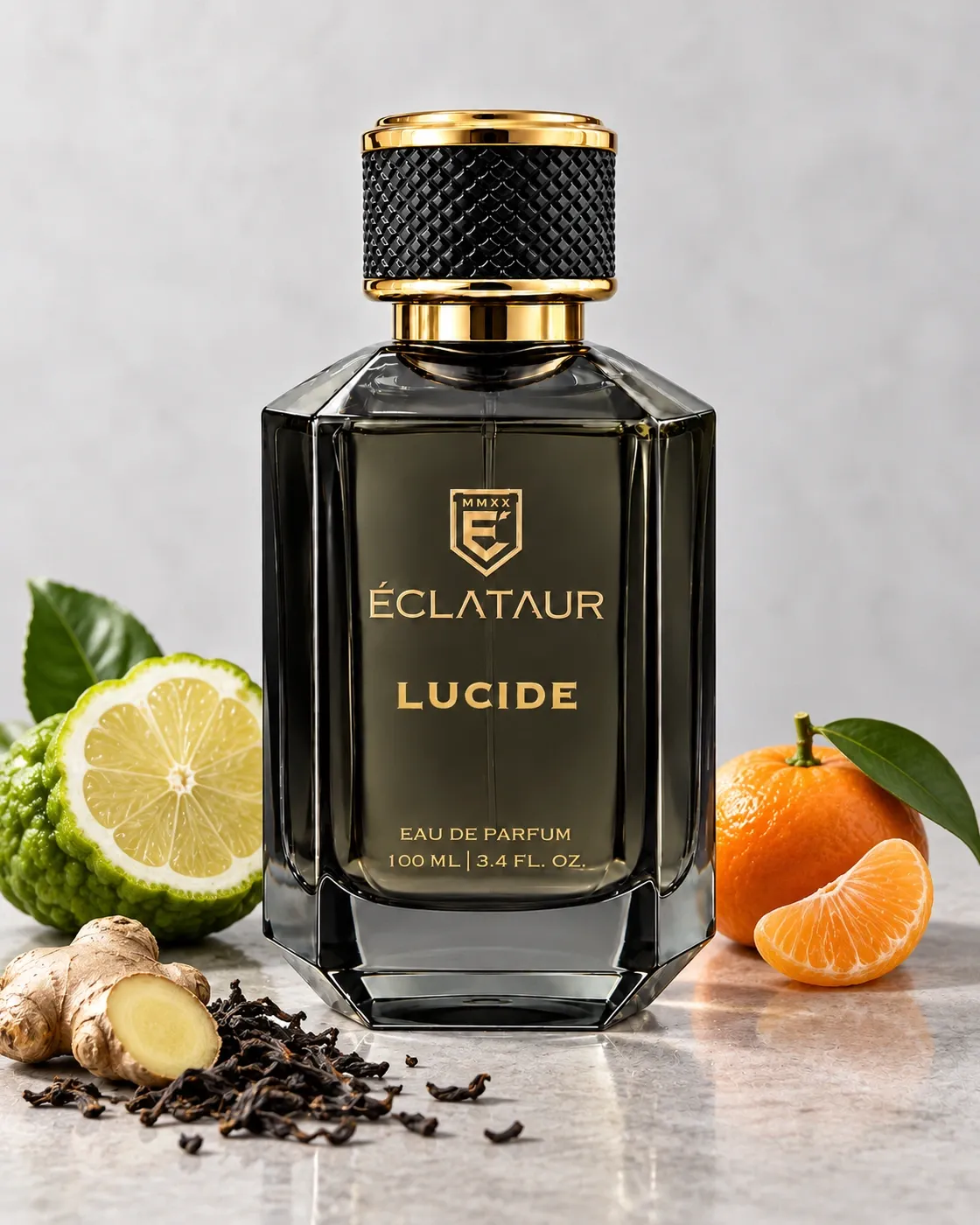
Bergamot, lemon, grapefruit, marine and green accords. The brightest and most immediately legible family, and the one that fades fastest without a substantial base beneath it. Reads as clean, awake and uncomplicated. Best in heat and in daylight. In our collection: AQUA at the most aquatic end, LUCIDE as the most versatile daily citrus, REGENT with a fruity chypre structure underneath, and NOBLE where the citrus sits on wood.
Aromatic and Fougère
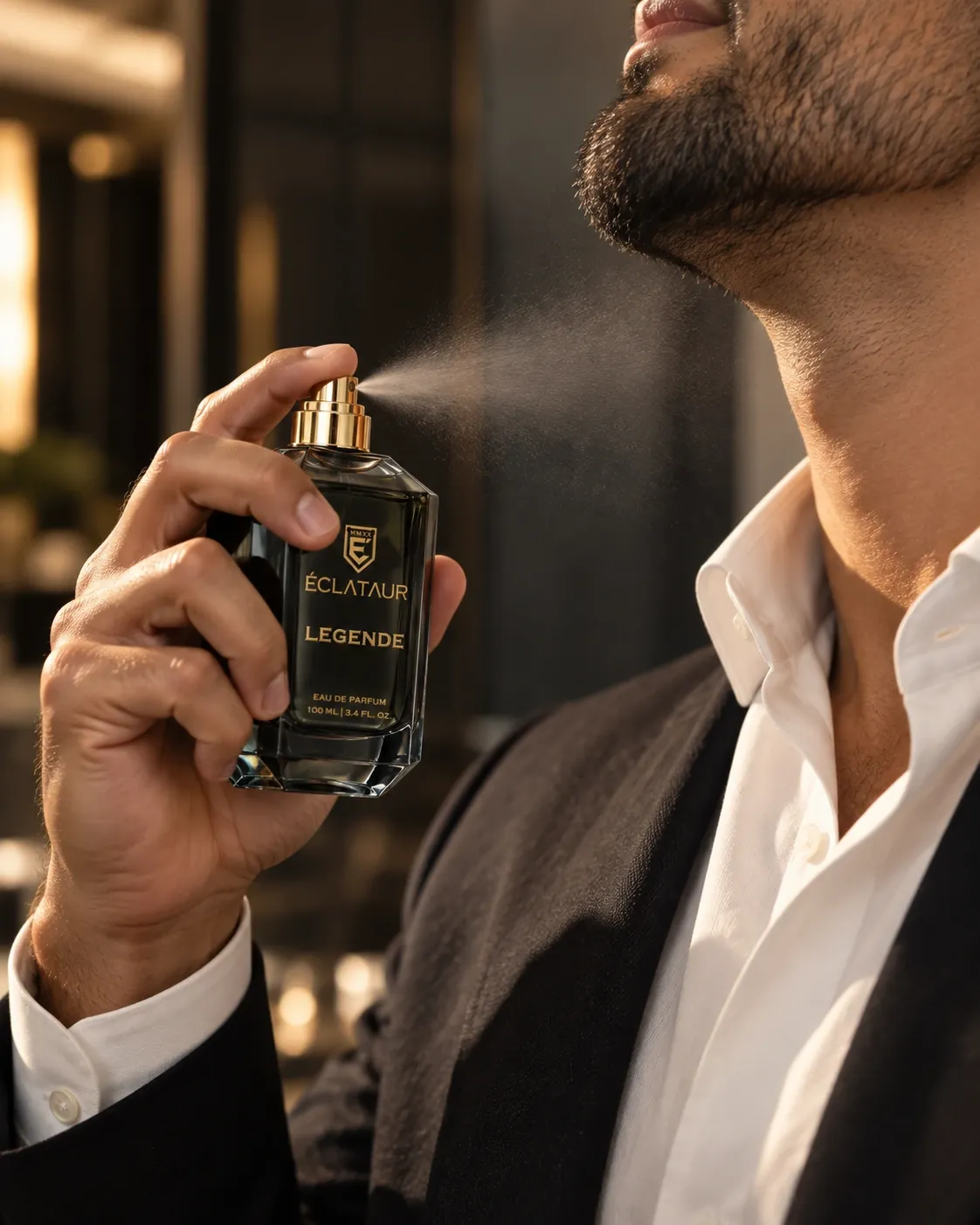
Lavender, rosemary, sage and herbs over a mossy or woody base. Fougère means fern, which no fern ever smelled like, and the family is best understood as the structure behind most classic barbershop scents. Crisp without being sharp, and considerably more durable than pure citrus. In our collection: KNIGHT as the cleanest reading, LEGENDE with spice through the heart, and PULSE where lavender meets a gourmand base.
Amber and Oriental
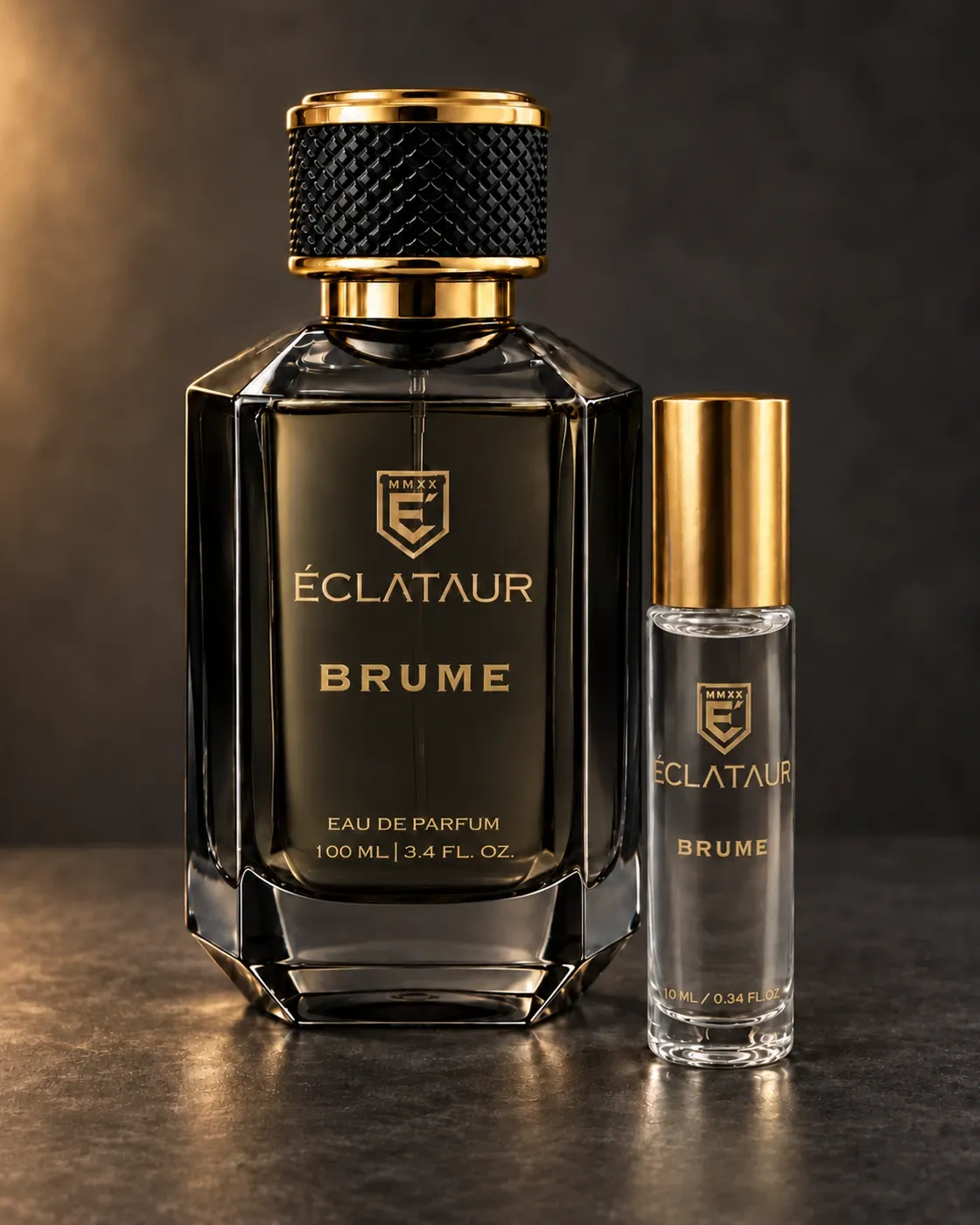
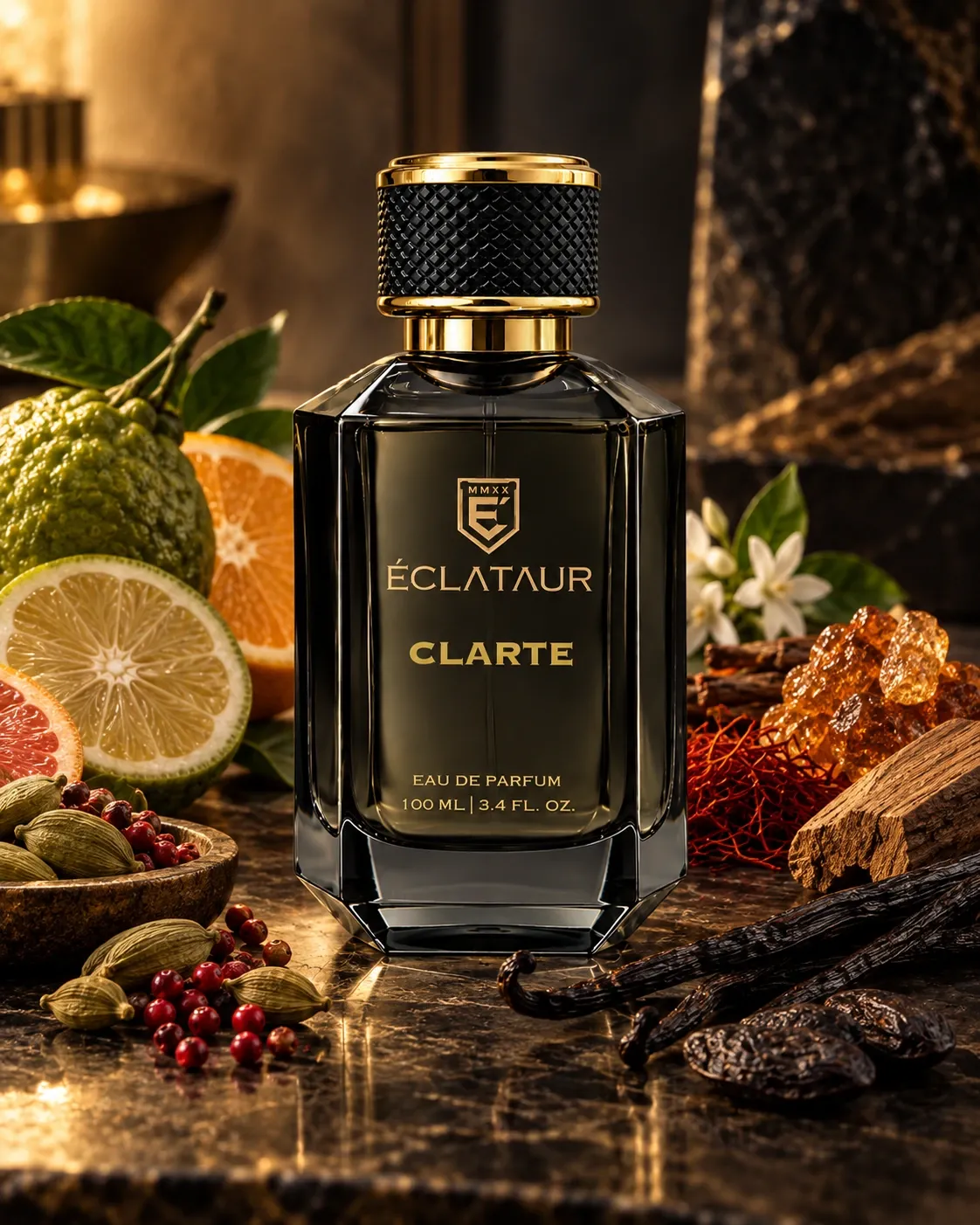
Resins, labdanum, benzoin, spice and warm woods. A warm family that often brings the base notes forward in the dry-down. Reads as enveloping and formal. Best in cold weather and after dark. In our collection: CLARTE for amber and musk, EMBER for saffron warmth, FLARE for the most luminous reading, BRUME for sandalwood depth, and AZUR where cardamom leads.
Floral
Jasmine, tuberose, rose, orange blossom and the vast territory between them. The largest family in perfumery and the most internally varied, running from soapy and transparent to narcotic and heavy. White florals in particular carry far more weight than people expect. In our collection: INFINIE for tuberose over wood and musk, MYSTERIA for white floral with an oriental base, and DESIRE for the fruitier, lighter reading.
Gourmand
Vanilla, cocoa, tonka, caramel, tobacco and coffee. The youngest family, barely thirty years old as a recognised category, and the one that divides opinion most sharply. Done badly it is confectionery. Done well it is warmth with a shadow in it. In our collection: SUNLATTE for pure vanilla, SERAPH for cocoa and white florals, OPUS for a floral gourmand, NEXUS for tobacco and vanilla, and FORTUNE where spice cuts the sweetness.
A family does not tell you whether you will like a fragrance. It tells you which four to test instead of which twenty.
Compare Five Fragrances by Family
These five starting points turn the family descriptions into a shortlist. Compare LEGENDE with REGENT for two citrus openings that develop differently, or MYSTERIA with SERAPH for white flowers alongside a gourmand direction. CLARTE offers an amber and woody contrast. Choose two or three to wear on separate days; the notes describe the composition, not a promise of how it will perform on your skin.
| Fragrance | Scent direction and distinction |
|---|---|
| LEGENDETester → | Fresh spicy, aromatic, woody. Bergamot and pink pepper lead into lavender, geranium and Sichuan pepper, with cedar and labdanum beneath. |
| REGENTTester → | Citrus woody, fruity chypre. Pineapple, apple and blackcurrant join bergamot; birch tar and patchouli distinguish it from LEGENDE's aromatic spices. |
| CLARTETester → | Amber and woods. An amber, tobacco and sandalwood heart settles into white musk, vanilla and cedar. A warm direction to compare with the citrus-led pair. |
| MYSTERIATester → | White floral. Orange blossom, jasmine and tuberose form the heart, over amber, vanilla and musk. Start here when flowers are the draw. |
| SERAPHTester → | Gourmand, cocoa, floral. Coffee and roasted almond lead into cocoa, rose, jasmine and tuberose. Compare its gourmand notes with MYSTERIA's white-floral heart. |
Each tester link starts your Prelude tray with that fragrance, subject to availability. Read the skin-testing guide for what to notice across each wear, or choose your own testers.
Why Most Fragrances Belong to More Than One Family
The tidy version above is a simplification, and it is worth understanding where it breaks down. Almost no serious composition sits in a single family, because a perfume built from one kind of material has nowhere to go across a day of wear. Structure requires contrast.
EMBER is a useful example. It is an amber at heart, but the saffron and jasmine at the top give it a floral opening, and the cedar and oakmoss underneath pull it woody in the dry-down. Calling it an amber is accurate and incomplete. The same is true of PULSE, which is structurally a fougère with a gourmand base, and of REGENT, a citrus opening on a fruity chypre.
This is why testing matters more than reading. A fragrance described as amber may open so brightly that the amber emerges only as the heart and dry-down develop, and one described as citrus may dry down into something warm you would never have predicted from the label. The family tells you where a composition is anchored. Only your own skin tells you how the journey feels. Our guide to testing before buying covers that protocol.
How to Find Your Family in One Week
You do not need a systematic education in perfumery. You need three deliberate wears and some honesty about what you actually reached for.
Start From What You Already Enjoy
Not fragrance. Everything else you choose by smell. Coffee, cut grass, woodsmoke, orange peel, warm bread, rain on stone. Write down four. Almost everyone finds their list clusters, and the cluster points directly at a family. People who list bread and coffee are gourmand people who have not tried a gourmand yet.
Test Across Families, Not Within One
The instinct is to try four ambers. That teaches you very little, because you will spend the week distinguishing between near neighbours. Take one from three distant families instead: a citrus, an amber, a gourmand. Contrast is what reveals preference. Once you know the direction, then go deep inside it.
Notice What You Reach for on Day Six
Judgement made at the moment of application is unreliable, because novelty flatters. The honest signal comes later: after a week with three testers on a shelf, one of them has been used twice as often as the others and you did not decide to do that. That is your family. Trust the habit over the opinion.
Families, Seasons and the Weather You Live In
Family also predicts how a fragrance will behave in temperature, which is the practical reason to know yours. Heat amplifies and accelerates. The same amber that feels luxurious in December can feel airless in July, while a citrus that seems thin in winter comes fully alive in humidity.
The rough rule is that lighter families reward heat and heavier families reward cold. Fresh, citrus and aquatic compositions are built for summer and daylight. Ambers, orientals and the darker gourmands are built for winter and evening. Aromatics and florals sit in between and carry across the year more easily than either extreme.
There are useful exceptions. LUCIDE holds through cold weather because there is real wood underneath the citrus. EMBER works in warm weather in a way most ambers do not, because the saffron and jasmine keep the opening bright. If you live somewhere genuinely hot for most of the year, as we do in Texas, weight your collection lighter than the seasonal rule suggests and use the concentration to add presence instead: an oil-based roll-on gives you depth without volume, which our guide to oil versus spray explains in full.
For anyone who wants to go further than five categories, the classification system devised by Michael Edwards is the reference most of the industry uses, and Fragrantica holds decades of crowdsourced wear data organised along similar lines. The Britannica entry on perfume is the clearest short account of how the families emerged historically.
Fragrance Families Explained: Your Questions Answered
What are the main fragrance families?
Five cover almost everything in practice: fresh and citrus, aromatic and fougère, amber and oriental, floral, and gourmand. Older systems split these differently and some add chypre and woody as separate families, but for choosing a fragrance these five are enough. Most compositions sit in one family and borrow from a second.
How do I know which fragrance family suits me?
Start with smells you already enjoy outside perfume, such as coffee, citrus peel, cut grass or woodsmoke, and look for the cluster. Then test one fragrance from three distant families over a week rather than four from the same one. Contrast reveals preference far faster than comparing near neighbours does.
Can a fragrance belong to two families?
Almost all of them do, and the good ones especially. A composition built from a single kind of material has no contrast and nowhere to travel across a day. A fragrance may open floral, settle amber and dry down woody. The family label tells you where it is anchored, not everything it does.
Which fragrance family lasts the longest?
Amber and oriental, by a wide margin, because they are built largely from heavy base-note material such as resins and woods that evaporate slowly. Gourmands are close behind. Pure citrus and aquatic compositions are the shortest-lived, since the molecules that make them bright are also the lightest and most volatile.
Are fragrance families the same as men’s and women’s fragrance?
No. Families describe what a composition is made from. The gendered categories are marketing conventions that vary by country and decade, and they have shifted repeatedly over the last century. Plenty of people find their preferred family sits on the other side of that line from where they were shopping.
Should I wear different families in summer and winter?
It helps, because heat amplifies and accelerates a composition. Lighter fresh and citrus families reward warm weather, while ambers and darker gourmands reward cold. Florals and aromatics carry across the year most easily. If you live somewhere hot year round, weight lighter and use a higher concentration for depth rather than a heavier family.