The Guide Issue 03
How to Make a Fragrance Last Longer on Your Skin
Most fragrance that disappears by lunchtime was never given a fair chance to stay. The formula is rarely the problem, and the fix takes seconds.

Most fragrance that disappears by lunchtime was never given a fair chance to stay. The formula is rarely the problem. The problem is dry skin, the wrong application points, three sprays where one would have done, and a bottle stored on a bathroom shelf in the steam of a daily shower. Learning how to make perfume last longer is mostly a matter of removing the things working against it, and the whole method takes about thirty seconds a day.
There is a version of this advice that tells you to spray more. It is wrong, and it is expensive. A fragrance built at a serious concentration does not need volume, it needs surface conditions that hold on to it. What follows is the sequence we give to anyone who tells us their scent vanished, arranged from the change that makes the biggest difference to the one most people never think about.
Why Fragrance Fades: Three Forces Working Against You
Longevity is a physics problem before it is a perfumery problem. Aromatic molecules leave your skin at different speeds depending on their weight, and everything about the surface they sit on either slows that departure or speeds it up. Three forces do almost all of the damage.
Evaporation, in Order of Weight
Top notes are built from the lightest, most volatile molecules in the formula, which is exactly why they announce themselves first and leave first. Citrus and aromatic openings are usually gone inside thirty minutes by design. What you are judging when you say a fragrance did not last is almost never the top of the composition. It is whether the heart and base were built heavy enough to stay behind after the opening burns off.
Dry Skin Has Nothing to Hold
This is the single biggest variable, and the one most people get wrong. Fragrance binds to the lipids in your skin. Dry skin has fewer of them, so the composition sits on the surface and leaves faster. Two people can wear the same fragrance from the same bottle and get results hours apart purely on hydration. If you fix one thing in this guide, fix this one.
Heat and Friction
Warmth accelerates evaporation. That is useful in small doses, which is why pulse points work, and destructive in large ones, which is why a fragrance applied before a hot commute reads loudly for an hour and then quietly for the rest of the day. Friction does its own damage. Anywhere fabric rubs against a freshly applied wrist, the composition is being physically removed.
Longevity is not a quality you buy. It is a set of conditions you provide. The formula only has to be good enough to reward them.
Where to Apply Fragrance So It Lasts
Placement changes results more than quantity does. The goal is to find spots that are warm enough to project the scent upward, sheltered enough to avoid friction, and hydrated enough to hold the composition in the first place. These four locations do the most work.
Pulse Points, But Not the Obvious Ones
Inner wrists are the traditional answer and the most exposed to friction. Better options sit lower and stay covered: the inner elbow, the base of the throat, the side of the neck below the jaw. All three are warm, all three are sheltered by sleeves or collars, and all three project upward through the day rather than out into a handshake and away.
Apply to Moisturised Skin
Use an unscented moisturiser and apply the fragrance while the skin is still slightly damp, not wet. The lipids give the composition something to bind to and the moisture slows the initial flash of the top notes. An unscented base matters: a perfumed body lotion introduces its own accords, and the two formulas will fight each other in the first hour. Straight out of a shower is the ideal window.
One Point Below the Waist
Scent rises. A single application behind the knee or at the ankle sits undisturbed all day and feeds the composition slowly upward as your body warms it, which is why it reads as a scent that follows you rather than one that arrives before you. This is the trick that most reliably surprises people who thought their fragrance had stopped working.
Never Rub It In
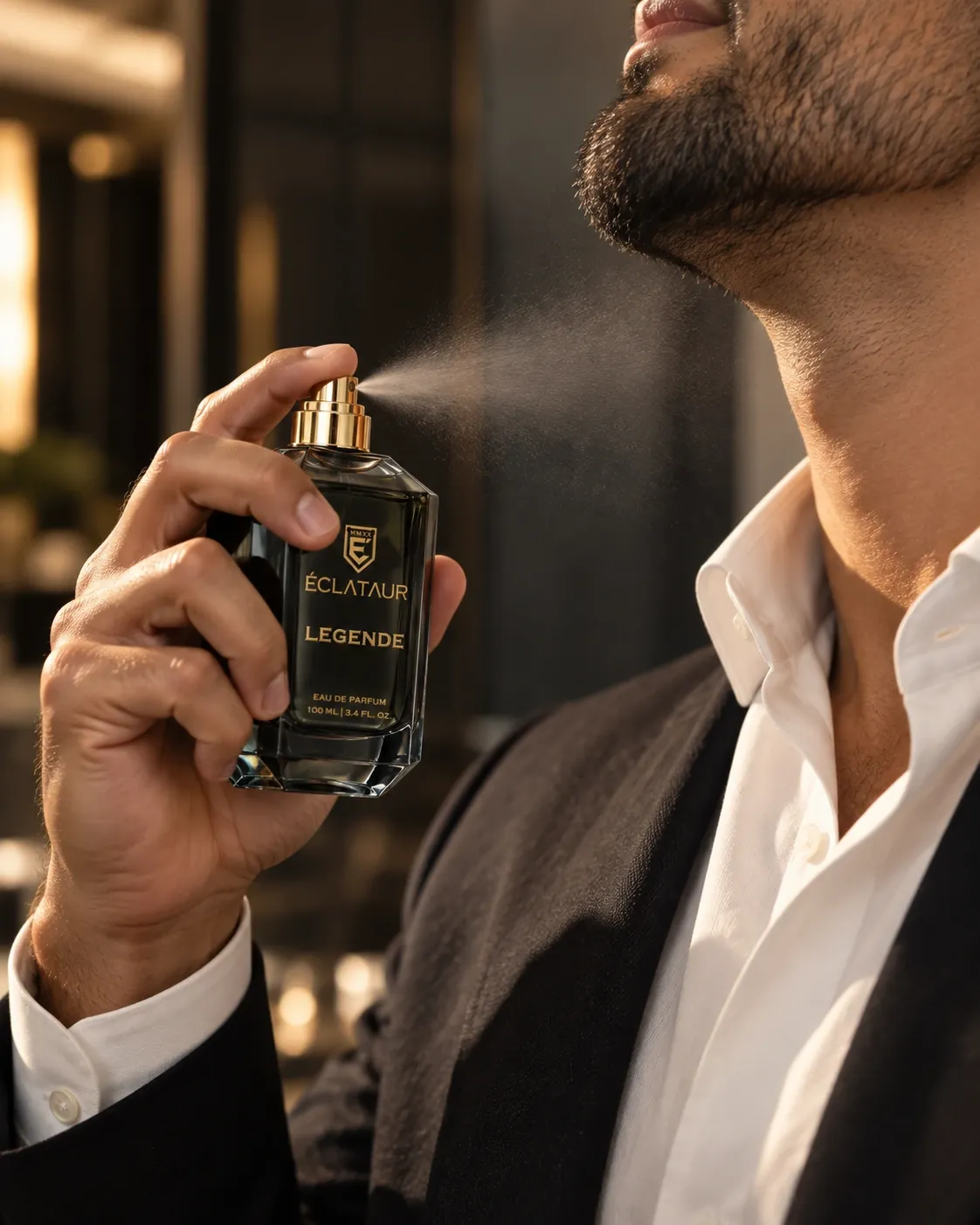
Pressing your wrists together after spraying is the most common habit in fragrance, and it shortens the wear every time. Rubbing generates heat that flashes off the top notes early and mechanically breaks up the structure of the opening. Spray, then leave it completely alone. Let the composition dry on its own for a minute before you put a sleeve over it.
The Layering Method: Oil Underneath, Spray Above
The most effective longevity technique is not a trick at all. It is using two concentrations together, which is the reason serious houses offer both formats. An oil-based extrait applied first behaves like an anchor, because oil evaporates far more slowly than alcohol and holds the heavier base molecules against the skin. A spray applied over the top of it supplies the projection and the bright opening that oil alone cannot.

Step One: The Roll-On as a Base
Roll a single pass onto the inner elbow and the base of the throat. Oil holds close to the skin and releases slowly, so on its own it reads as an intimate scent that stays within arm’s length. That is exactly what you want underneath. Our oil versus spray guide covers how the two formats differ in full.
Step Two: The Spray on Top
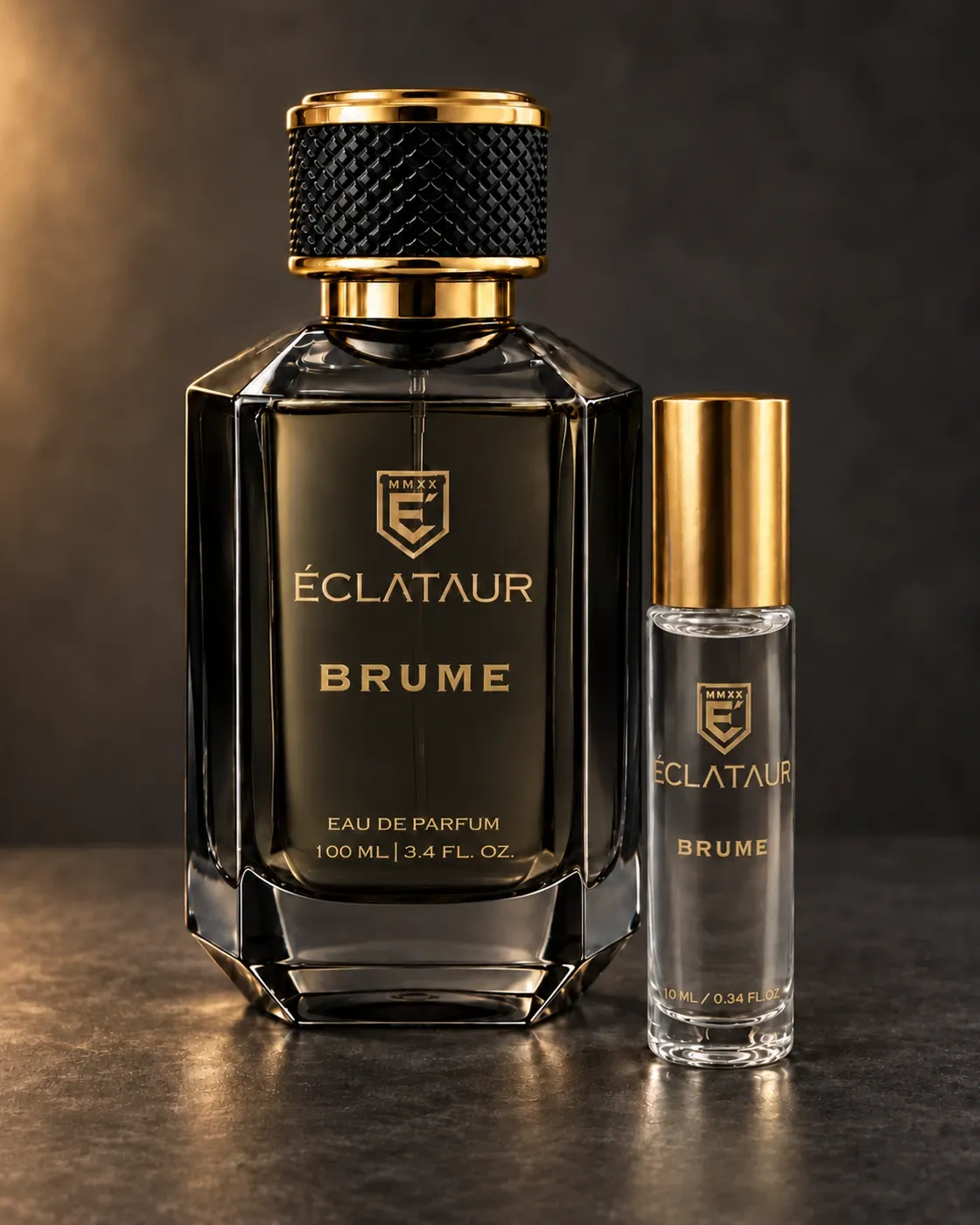
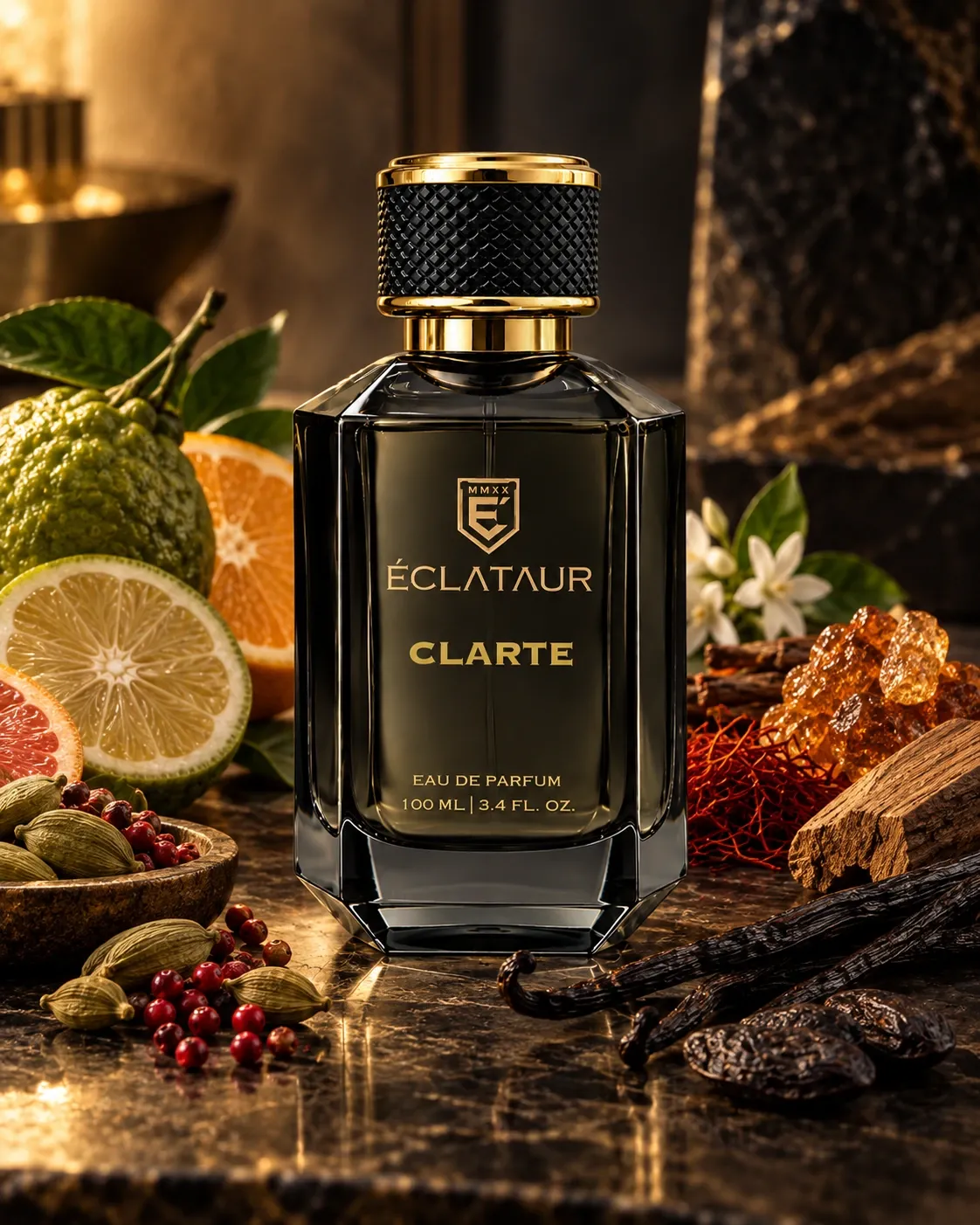
Two sprays over the same points, from roughly a hand’s width away. The alcohol carries the opening outward and gives the composition its projection, while the oil beneath keeps feeding the base long after the spray alone would have thinned out. Layering the matching roll-on and spray of one scent is the simplest version. CLARTE, EMBER, NEXUS and BRUME all exist in both formats.
Layering across two different scents is the advanced version, and it works when the two share a family rather than competing across families. EMBER under FLARE deepens the amber. REGENT under LEGENDE keeps the citrus bright while the spicy heart carries longer. If you are unsure where to start, the pairing suggestions on each product page are the ones we have actually tested on skin.
Four Habits That Quietly Shorten the Wear
Some of the most common fragrance routines are working directly against longevity. None of these are dramatic mistakes. They are simply small daily choices that cost hours.
Spraying Into the Air and Walking Through
Almost all of it lands on the floor. What reaches you settles on hair and fabric in an uneven film with no skin contact and no body heat to develop it. It is the least efficient possible use of a fragrance you paid for. Apply directly to skin, every time.
Storing the Bottle in the Bathroom
The worst room in the house for perfume, and the room nearly everyone keeps it in. Daily temperature swings and shower humidity degrade a composition over months, flattening the top notes first. A drawer or a closed cupboard in a room that stays at a steady temperature will keep a bottle performing the way it did on day one for years.
Leaving It in Direct Light or in the Car
Ultraviolet light breaks down aromatic molecules and heat accelerates the process. A bottle on a sunny windowsill is being slowly cooked, and a bottle left in a car through a Texas summer can shift noticeably in a single season. Keep it in the box if you have kept the box. Dark and cool is the whole rule.
Judging Longevity by Your Own Nose
You stop registering a scent you are wearing long before other people do. Olfactory adaptation means your brain filters constant input, so the fragrance you cannot smell at hour four is very often still clearly present to everyone around you. Ask someone before you reapply. Most reapplication is unnecessary.
What the House Can Control, and What It Cannot
There is a limit to how much application technique can rescue. A composition bottled before it has finished resting will underperform no matter how carefully it is worn, because the accords have not yet settled into a stable structure. That is the reason every ÉCLATAUR batch rests for a full thirty days before it is filled, a process covered in detail in our maceration guide. Concentration matters too. Our sprays are built as eau de parfum in the twenty to twenty-five percent range, which is where a formula has enough material in it to still be present in the evening.
Everything after that is yours. Hydrated skin, sheltered application points, no rubbing, sensible storage, and the patience to not reapply at hour four. If you want to learn what a fragrance genuinely does on your own skin across a full day before committing to a bottle, The Prelude exists for exactly that, and our guide to testing before buying sets out the protocol. For background reading on how volatility and note structure interact, the Britannica entry on perfume remains the clearest short reference available.
How to Make Perfume Last Longer: Your Questions Answered
How can I make my perfume last all day?
Apply to freshly moisturised skin using an unscented base, choose sheltered warm points such as the inner elbow and the base of the throat rather than exposed wrists, add one application below the waist, and do not rub. If you own both formats of a scent, roll the oil on first and spray over the top. Those five changes together are usually worth several hours.
Does moisturiser really help fragrance last longer?
Yes, and it is the most effective single change most people can make. Fragrance binds to the lipids in skin, so hydrated skin holds a composition measurably longer than dry skin. Use an unscented moisturiser so it does not introduce competing accords, and apply the fragrance while the skin is still slightly damp.
Why does my perfume disappear after an hour?
Usually one of three things. The top notes have simply done their job and left, which is normal and happens within thirty minutes in most compositions. Your skin is dry and has little to hold the rest. Or you are no longer registering a scent that other people can still smell clearly, which is olfactory adaptation rather than fade.
Should I spray perfume on my clothes or my skin?
Skin. Fabric holds a scent for a long time but it holds it flat, because there is no body heat to develop the heart and base as the day goes on. Skin application is what produces the arc a perfumer designed. Some oils can also mark delicate fabrics, so keep application to skin as a rule.
Does layering an oil under a spray actually work?
It does, because the two formats fail in opposite directions. Oil sits close to the skin and releases slowly but projects very little. Alcohol-based spray projects well but leaves faster. Oil underneath and spray on top gives you the projection of one and the staying power of the other. Layer the matching pair of a single scent first before mixing different fragrances.
Where is the worst place to store a perfume bottle?
A bathroom shelf, followed closely by a sunny windowsill and a car. Heat, humidity and ultraviolet light all break down aromatic molecules, and the top notes degrade first. A closed drawer in a room at steady temperature will keep a bottle performing as intended for years.