The Guide Issue 11
Why the Same Perfume Smells Different on Everyone
Why does perfume smell different on everyone? Skin is not paper: its oil, warmth and moisture set how fast each material leaves, and no two are alike.
Perfume smells different on everyone because skin is not paper: its oil, warmth and moisture set how fast each material leaves, and no two skins are alike. Three properties of skin explain almost every difference; much of the rest is folklore. Some of it you can change, most you cannot: test on your own skin.
Why does perfume smell different on everyone? Skin is not paper: its oil, warmth and moisture set how fast each material leaves, and no two are alike. A fragrance is a sequence of departures, and the surface it sits on sets the pace of every one of them. The composition in the bottle is the same for everyone; the composition on the skin never is.
This is the most repeated fact in fragrance and the least explained. This guide separates what is actually known about skin and scent from what is passed around as chemistry, says what you can change and what you cannot, and ends where it has to: with the reason the house asks you to test on your own skin and nobody else’s.
What Is Actually Known
Three properties of skin change how a fragrance behaves on it, and they are enough to explain almost every difference between one wearer and the next.
Oil
Aromatic materials bind to the oils in skin. Skin that makes more of its own oil holds a fragrance closer and releases it more slowly, so the heart and base stay longer and the whole composition reads warmer and rounder. Dry skin has less to hold, so the same fragrance sits on the surface, projects more at first and fades sooner. This is the largest single difference between two wearers, and it is the one you can change.
Warmth
Warm skin speeds evaporation. A person who runs warm, or a warm day, pushes every material off the skin faster: the opening is louder, the heart arrives sooner, the base is reached earlier. A person who runs cool gets a quieter, slower version of the same fragrance. Neither is the fragrance going wrong; both are the same arc at different speeds.
Moisture and the Skin’s Own Smell
Hydrated skin softens the first flash of a spray and holds the lighter materials a little longer. And every person’s skin carries its own faint smell, made by the bacteria that live on it, which sits under the fragrance like a ground under a painting. The same amber over two different grounds is two slightly different ambers.
The bottle is the score. The skin is the instrument. The same score played on two instruments is the same music, and never the same sound.
What Is Folklore
Several explanations circulate that sound like chemistry and are mostly not.
“Your skin eats perfume.” Skin does not consume anything. Dry skin holds less, so a fragrance leaves faster and seems to vanish; that is release, not digestion. The fix is moisture, and it works.
“It is your pH.” Skin is mildly acidic in everyone, and the small differences between people matter far less than oil and warmth. Acidity can nudge a few materials one way or another; it does not decide whether a fragrance suits you, and it is not the reason a friend’s bottle smells different on you.
“It is your blood type, your diet, your hormones.” Diet and medication can change the skin’s own smell and how much oil it makes, which changes the ground under the fragrance; that part is real, and it is why a fragrance can read differently on the same person from one season to another. Blood type does nothing. Hormones act through oil and warmth, not through any mystery of their own.
“The fragrance has turned on me.” Sometimes true, and then the cause is the bottle, not the skin: heat, light and air change a composition over time, which the storage guide covers. Far more often the fragrance is unchanged and the wearer has stopped noticing it, which is the subject of the nose-fatigue article, including the inherited case where one material, musk above all, cannot be smelled at all.
Which Notes Change Most
Not every part of a composition is equally sensitive to skin. The opening is the most exposed: citrus and light aromatics are the first to leave on any skin, and on dry or warm skin they are gone before the wearer has decided anything, which is why a fragrance that seemed bright at the counter can seem to start in its heart at home. The base is the least exposed: resins, woods and musks stay on almost any skin, and the differences there are of warmth rather than of presence.
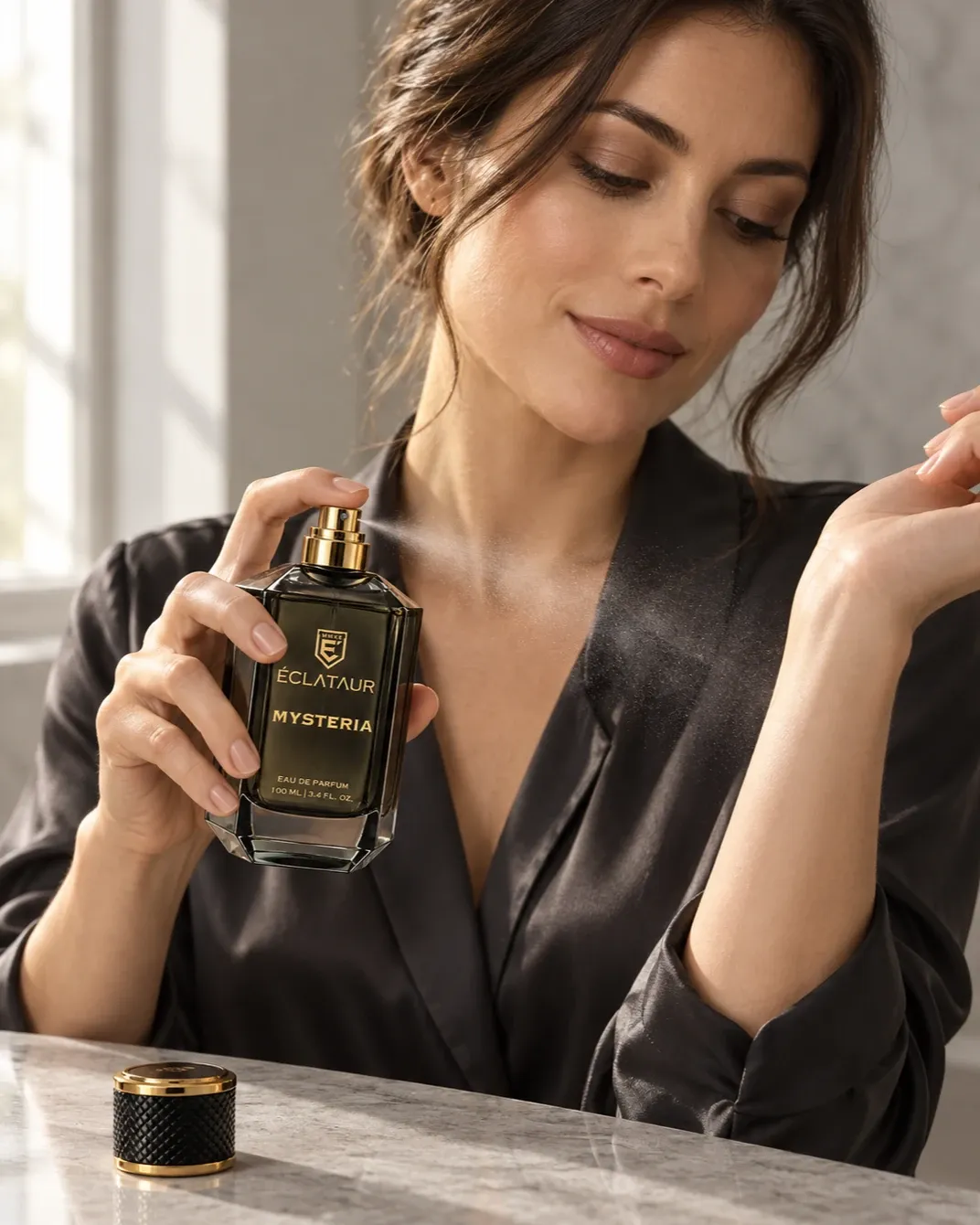
The heart is where skin does its real editing. A floral heart reads sweeter on oily skin and sharper on dry; a spiced heart reads warmer on a warm wearer and drier on a cool one. This is why two friends can agree on the opening of MYSTERIA and disagree about its middle hours. The notes article explains the three levels, and the VELUM article explains why the house builds its base to hold its character whatever the skin above it does.
What You Can Change
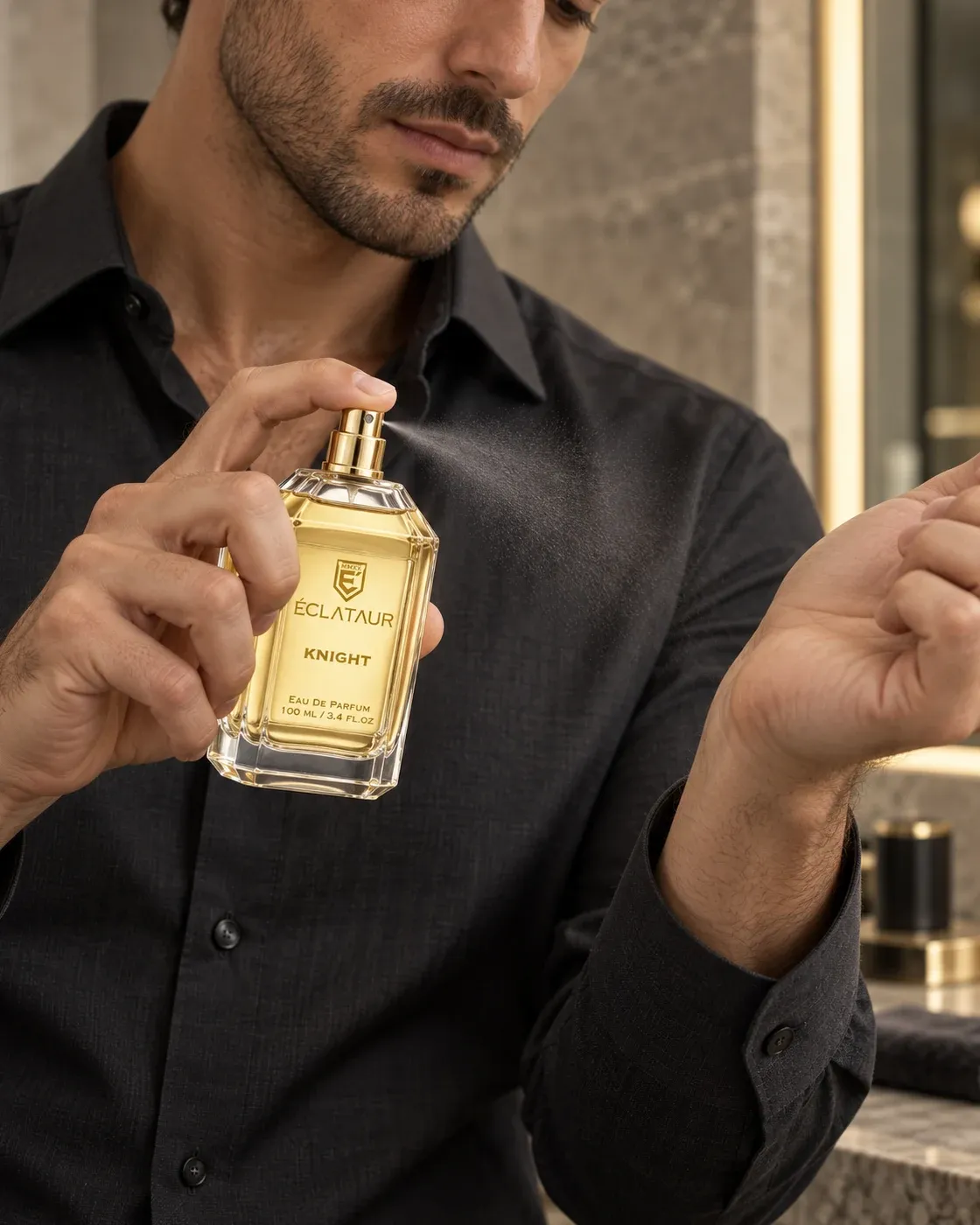
Oil and moisture are yours to set. An unscented moisturiser on the skin before a fragrance is applied gives the composition something to bind to and slows the first flash; it is the single largest correction available, and it makes most fragrances read on dry skin the way they read on oily skin. The dry-down guide gives the routine.
Placement is yours too. Sheltered, warm points hold a fragrance; exposed, rubbed ones lose it. And the format is a choice: a roll-on perfume oil sits in a layer of oil of its own and depends less on the skin’s, which is why some people with dry skin find the house’s roll-ons truer to the bottle than the sprays, a difference the oil versus spray guide describes.
Warmth and your skin’s own smell are not yours to set, and they are the reason no one can tell you how a fragrance will be on you. Not the house, not a friend, not a review.
How to Compare a Fragrance on Two People
If you want to see the editing happen, do it on purpose. Take one tester and apply it to the same spot, the inside of the forearm, on two people at the same hour of the same morning, from skin that has had the same treatment: either both moisturised or neither. Smell both at three points, when it is applied, in the middle of the day and in the evening, and say out loud what differs. Almost always the opening is nearly the same on both, the heart has shifted, and the base is the same material at two different volumes. That is skin at work, and it is as much as any laboratory could tell you about why your friend’s bottle is a different fragrance on you.
Why This Is the Whole Case for Testing
Everything above comes to one conclusion. A fragrance can be described, and the house describes its fragrances carefully; it can be compared, and the families guide compares them; it can be read from its notes. But it cannot be known until it has spent a day on the skin that will wear it. That is what the Prelude is for: testers from the same batch as the bottle, worn at home through a whole day, judged in the evening when the skin has finished its editing. The testing guide sets out how.
For a plain account of how the skin and the sense of smell work, Britannica’s entry on smell is a sound starting point, and Fragrantica remains the most useful public record of how one fragrance is described by many different wearers.
Why Does Perfume Smell Different on Everyone: Your Questions Answered
Why does perfume smell different on everyone?
Because skin sets the pace at which each material leaves. Oily skin holds a fragrance closer and longer; warm skin pushes it off faster; hydrated skin softens its opening; and every person’s skin has its own faint smell under the fragrance. The bottle is the same for everyone and the skin never is.
Does skin pH change how perfume smells?
Only a little. Everyone’s skin is mildly acidic, and the small differences between people matter far less than oil and warmth. Acidity can nudge a few materials; it does not decide whether a fragrance suits you. The pH explanation is mostly folklore.
Why does perfume fade faster on dry skin?
Because fragrance binds to the oils in skin, and dry skin has less to hold it. The composition sits on the surface, projects more at first and leaves sooner. An unscented moisturiser applied before the fragrance corrects most of the difference.
Can diet or medication change how my perfume smells?
They can change the skin’s own smell and how much oil it makes, which changes the ground the fragrance sits on. That is why a fragrance can read differently on the same person from one season to another. Blood type does nothing; hormones act through oil and warmth.
Why does my friend’s perfume smell different on me?
Different oil, warmth and skin smell, and possibly a different nose: some people cannot smell certain materials, musk above all, which is inherited. The only way to know how a fragrance will be on you is a tester on your own skin through a full day.
How do I find out how a perfume smells on my skin before buying?
Wear a tester at home through a whole day, apply it to moisturised skin, and judge it in the evening when the skin has done its editing. The Prelude fills its testers from the same batch as the bottles, so what you test is what you would own.